
The 1% Who Walked Away: The Story of Salman Al-Farsi (ra)

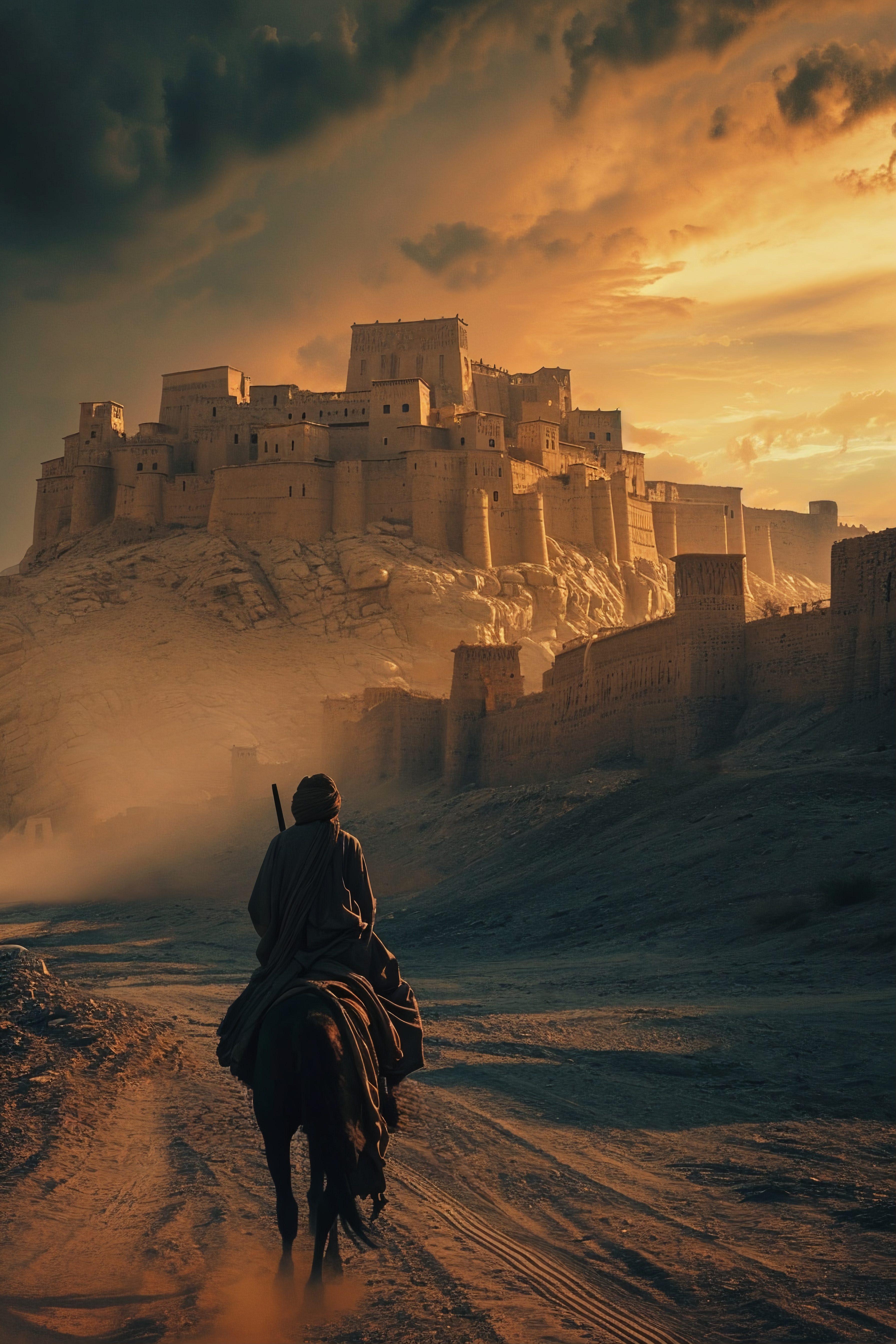
The Mindblowing Paradox of Salman Al-Farsi (ra)
Imagine a man born into the ultimate “1%” of the 7th century. He was the son of a high priest in the Persian Empire—a superpower so vast and wealthy that its priests were sometimes minted on currency instead of its kings. He was groomed for a life of absolute power, religious authority, and material abundance.
Yet, this same man ended his life as the Governor of that very empire’s capital, living in a single-room house, weaving palm-leaf baskets to earn his daily bread, and giving his entire salary to the poor.
Between these two points lies a thirty-year odyssey that defies logic. Salman Al-Farsi (ra) was a man who escaped a golden cage, survived chains and imprisonment, was betrayed by merchants, sold into slavery nearly twenty times, and eventually—through relentless curiosity—found himself standing in a palm grove in Madinah, looking for a seal on the back of a man he had never met.
He is the only companion to be claimed by both the Muhajirun (The Migrants / مُهَاجِرُون) and the Ansar (The Helpers / أَنْصَار), only for the Prophet ﷺ to settle the dispute by saying: “Salman minna Ahl al-Bayt” (Salman is one of us, the members of the Prophetic Household / سَلْمَانُ مِنَّا أَهْلَ الْبَيْتِ). For the modern professional, his life is not just a biography; it is a masterclass in purpose-driven navigation.
The Crisis of Meaning in the Modern Workplace
For many Muslim entrepreneurs and professionals in their 30s and 40s, the “mid-career” phase often brings a peculiar type of exhaustion. You have scaled the ranks, built the businesses, or secured the titles, yet there is often a lingering sense of “Is this it?”
We live in an era of “hustle culture” and “flexing,” where professional success is measured by the car you drive or the size of your exit. We are often “sheltered” by our own success, much like Salman was sheltered in his father’s palace. We master the “fire” of our specific industries—KPIs, quarterly growth, market share—but our hearts remain restless.
Salman Al-Farsi (ra) speaks directly to the professional who feels that their current “success” is actually a gilded prison. He teaches us that the highest form of ROI (Return on Investment) is the pursuit of Truth (Al-Haqq / الحَقّ), and that true “innovation” is not just about making money, but about solving the existential problems of the Ummah (Community / أُمَّة).
The Biography of Salman Al-Farsi (ra)
The Sheltered Priest of Isfahan
Salman Al-Farsi (ra) was originally known as Rusbay bin Marzban (رُوزْبِيه بِن مَرْزُبَان). He was born in Isfahan, Persia, during a time when the world was divided between two titans: the Zoroastrian Persian Empire and the Christian Roman Empire. Salman’s father was the Dihqan (Chief/High Priest) of the village, responsible for the “Sacred Fire.”
Zoroastrianism (Al-Majus / المجوس) was the state religion, and Salman was groomed to be its guardian. His father loved him with an intensity that bordered on obsession, keeping him confined to the house like a prisoner to protect him from the world. Salman became so proficient in his faith that he was appointed the “Keeper of the Fire,” ensuring it never flickered out. However, a “fire” of a different sort was beginning to burn in his heart—a fire of doubt and inquiry.
The Deviation into the Light
One day, Salman’s father was preoccupied with his lands and sent Salman to check on the estates. On his way, Salman passed by a Christian church. The sound of their voices in prayer drew him in. As he watched them, he was struck by the beauty of their worship, particularly their Ruku (bowing / رُكُوع) and Sujud (prostration / سُجُود).
He realized that their way was better than the fire-worship of his ancestors. He stayed with them until sunset, ignoring his father’s errand. When he asked where the source of this religion was, they told him “Ash-Sham” (Greater Syria / الشام). When he returned home and told his father, the elder priest was horrified. “There is no good in their religion! Your religion and the religion of your forefathers is better!” he cried. Salman, showing the characteristic resolve of a truth-seeker, replied, “No, by Allah, it is better.” His father immediately chained him and imprisoned him in the cellar.
The Great Escape and the Path of Mentors
Through a secret messenger, Salman contacted the Christians and asked to be notified when a trade caravan arrived from Ash-Sham. When it arrived, he broke his chains, fled his home, and travelled to Damascus.
In Damascus, he sought the “Bishop,” the head of the church. He offered to serve him just to learn. However, he soon discovered that this leader was a Fitna (trial/corruption / فِتْنَة). The priest would command the people to give Sadaqah(charity / صَدَقَة), but he would hoard the gold and silver for himself. Salman stayed, watching seven chests fill with stolen wealth, hating the man but staying for the knowledge. When the priest died, Salman exposed his corruption to the people, who refused to bury him and instead crucified his corpse.
Despite this, Salman did not lose faith. A new, righteous priest was appointed. Salman said he had never seen a man who didn’t pray five times a day (as a Muslim) more devoted than this man. When this mentor was dying, Salman asked, “To whom do you recommend me?” The man replied that the world was corrupted, but there was one man left in Mosul.
Salman traveled to Mosul, then to Nisibis, and then to Amorium (in modern-day Turkey). At each stage, he sought a new mentor as the previous one passed away. He was a professional “intern” for the Truth, working manual labor—he owned some cows and sheep in Amorium—while absorbing the ancient scriptures.
The Prophecy of the Final Messenger
On his deathbed, the scholar in Amorium told Salman: “O my son, I do not know of anyone left who follows our way. But the time of a Prophet is near. He will be sent with the religion of Ibrahim (as). He will appear in the land of the Arabs and migrate to a land between two Harras (lava fields / حَرَّة) with palm trees. He has signs that cannot be hidden: He does not eat Sadaqah (charity / صَدَقَة), he accepts and eats from a Hadiyya (gift / هَدِيَّة), and between his shoulders is the Khatam an-Nabuwwah (Seal of Prophethood / خَاتَم النُّبُوَّة).”
Betrayal and the Years of Slavery
Driven by this specific “market intelligence,” Salman found a group of Arab merchants from the Banu Kalb. He offered them his cattle and sheep to take him to Arabia. They took his payment but betrayed him, selling him as a slave to a Jewish man in Wadi al-Qura.
Eventually, he was sold again to a man from the Banu Qurayza and taken to Yathrib (Madinah). The moment Salman saw the black volcanic rocks (Harrah) and the date palms, he knew he had reached his destination. He spent years in grueling labor, a Persian nobleman turned into a common slave, waiting for a man he had never seen.
The Meeting in the Palm Grove
One day, while Salman was atop a palm tree working for his master, his master’s cousin arrived, cursing the people of “Quba” for gathering around a man from Makkah who claimed to be a Prophet. Salman was so shaken that he nearly fell onto his master.
That evening, Salman took some food he had saved and went to Quba. He told the Prophet ﷺ, “I heard you are a righteous man and have needy companions. This is Sadaqah.” The Prophet ﷺ told his companions to eat, but he did not eat. Salman noted: “This is the first sign.”
A few days later, he brought more food to the Prophet ﷺ in Madinah and said, “I saw you did not eat charity, so this is a Hadiyya (gift).” The Prophet ﷺ ate and invited his companions to eat. Salman noted: “This is the second sign.”
Finally, at a funeral in Al-Baqi, Salman circled behind the Prophet ﷺ, trying to see his back. The Prophet ﷺ understood exactly what Salman was looking for and adjusted his garment. Salman saw the Khatam an-Nabuwwah exactly as described. He fell upon the Prophet ﷺ, weeping and kissing him, finally ending a thirty-year search.
The Ransom and the Miracle of the Palms
Salman was still a slave and could not join the early battles of Badr and Uhud. The Prophet ﷺ told him, “Makatib ya Salman” (Make a contract for freedom / مُكَاتَبَة). His master set a crushing price: planting 300 palm trees and paying 40 Uqiyah (ounces / أُوقِيَّة) of gold.
The Prophet ﷺ called the Sahaba (companions / صَحَابَة) to “help your brother.” They brought the saplings, and the Prophet ﷺ himself dug the holes and planted the trees with his own hands. Miraculously, every single tree survived. Then, a piece of gold the size of a bird’s egg was brought to the Prophet ﷺ. He gave it to Salman, who found that it weighed exactly 40 ounces. Salman was finally a free man.
The Battle of the Trench (Khandaq)
In the 5th year of Hijrah, a massive confederation of 10,000 soldiers marched to destroy Madinah. The Muslims were outnumbered and terrified. Salman Al-Farsi (ra) stepped forward with a “Persian” innovation. “In Persia, when we were besieged, we would dig a Khandaq (trench / خَنْدَق),” he suggested.
This was a tactic unknown to the Arabs. The Prophet ﷺ accepted the idea. Salman worked so hard digging the trench that both the Muhajirun and Ansar claimed him as their own. The Prophet ﷺ then granted him the ultimate honor: “Salman is of us, the Ahl al-Bayt.”
A Geopolitical Shift: The Integration of Persia
To understand Salman’s later life, one must understand the monumental shift in the world’s power structure. During the Caliphates of Abu Bakr (ra) and Umar (ra), the Sassanid Persian Empire—weakened by centuries of war with Rome and internal strife—finally collapsed. Following decisive victories like the Battle of Al-Qadisiyyah, the Persian lands were integrated into the burgeoning Islamic civilization.
This was not a colonial occupation in the modern sense; it was a total transformation of the administrative and spiritual landscape. The borders that once separated Salman from his homeland dissolved. When the Muslims established their headquarters in Al-Mada’in (Ctesiphon), the ancient capital of the Persians, they needed a leader who understood the local culture and language but was firmly rooted in the justice of Islam. Salman, the former Prince of Isfahan who had become a student of the Prophet ﷺ, was the perfect bridge.
The Ascetic Governor of Al-Mada’in
Salman was appointed the Governor of Al-Mada’in. He returned to the seat of Persian power not as a vengeful conqueror, but as a humble servant of Allah. Despite his high office and a salary of 5,000 Dirhams (دِرْهَم), he lived in a single-room house and gave his entire salary away in charity. He supported himself by weaving baskets and selling them in the marketplace. When he died, he wept because he feared he had too many possessions—which totaled only about 15 to 20 dirhams in value.
Lessons for the Modern Entrepreneur and Professional
Salman Al-Farsi’s (ra) life provides a strategic framework for entrepreneurs and professionals navigating a complex, often materialistic-oriented business and workspace.
1. The Quality of “Strategic Curiosity” and Truth-Seeking
Most professionals have “ordinary curiosity”—checking the latest tech trends or market shifts. Salman had existential curiosity. He was willing to pivot his entire “career” (from Priest to Student to Slave to Leader) to find the “Truth.”
Entrepreneurial Lesson: Don’t just look for “product-market fit”; look for “purpose-soul fit.” Salman had a promised future in the center of a superpower, yet he risked everything because his heart wasn’t content with a lie. For the modern professional, this means having the courage to walk away from “materially incentivized” paths if they compromise your Deen (religion / دِين) or your integrity. Curiosity for the Truth is the ultimate disruptor of the status quo.
2. Ummatic Contribution: Bringing “Persian” Innovation to the Trench
Salman did not just join the Muslims; he brought his unique cultural and professional background to solve their problems. The Khandaq was a “cross-border” innovation. He took a Persian military tactic and applied it to an Arabian context to save the Ummah.
Professional Lesson: Your “secular” skills—coding, accounting, marketing, engineering—are your “Persian Trench.” Modern Muslim professionals should look beyond personal family wealth. We must ask: “How can my specific professional expertise build civilizational strength for the Muslims?” We need entrepreneurs who don’t just build apps, but build “trenches” that protect the community’s interests, education, and financial independence. True success is when your professional skill set serves a cause larger than your own bank account.
3. The “Manual Labor” CEO: Navigating Status and Modesty
Salman was the Governor of Al-Mada’in, a position of immense Heba (prestige / هيبة). Yet, he wove baskets for his food. He understood that status is a tool for service, not a cushion for the ego. He practiced Samt (silence / صَمْت) and Zuhd(asceticism / زُهْد) to keep his heart connected to the Source.
Entrepreneurial Lesson: In a world of “flexing” on social media, the Muslim professional should maintain a “Basket-Weaver” heart. No matter how large your business grows or how high your salary becomes, keep your lifestyle modest. Engaging in “manual labor” or menial tasks within your own business can keep you grounded. Detachment from luxury is the ultimate protection against the “corrupt priest” syndrome Salman witnessed in his youth—preaching charity while hoarding wealth. Modesty is not just a personal virtue; it is a business strategy that ensures long-term integrity and prevents the “gilded cage” of high-maintenance living.
Conclusion: The Traveler’s Provision
Salman Al-Farsi (ra) died with the heart of a Musafir (traveler / مُسَافِر). He taught us that the world is a bridge, not a home. For the professional in their 30s and 40s, his life is a reminder that it is never too late to pivot toward the Truth, and that the greatest “exit strategy” is to leave this world with the same provision as a traveler—light, unburdened, and ready to meet the Beloved ﷺ.
May Allah allow us to embody the curiosity, the innovative spirit, and the profound humility of Salman ibn al-Islam. Amin.
The main reference and inspiration for the insights used in this article:
Suleiman, Omar [Yaqeen Institute]. (2022, September 22). Salman Al Farsi (ra): The Truth Seeker [Video]. YouTube.
Suleiman, Omar [Yaqeen Institute]. (2022, September 14). Salman Al Farsi (ra): Back to Persia. YouTube.